What launched, who qualifies, and how to test the new channel without wasting budget.
Apple Maps ads started rolling out in the U.S. and Canada on August 25, 2026. This is not another broad awareness channel. People open Maps because they are deciding where to go. Apple reports more than one billion relevant business searches each month, with one in two business searches leading to an action such as a call, directions request, share, or visit to a listing.
For eligible local businesses, the opportunity is simple: buy visibility at the moment a nearby customer is choosing. The catch is that your Apple Maps place card becomes the landing page. If the listing is weak, paying for more views will only expose the weakness faster.
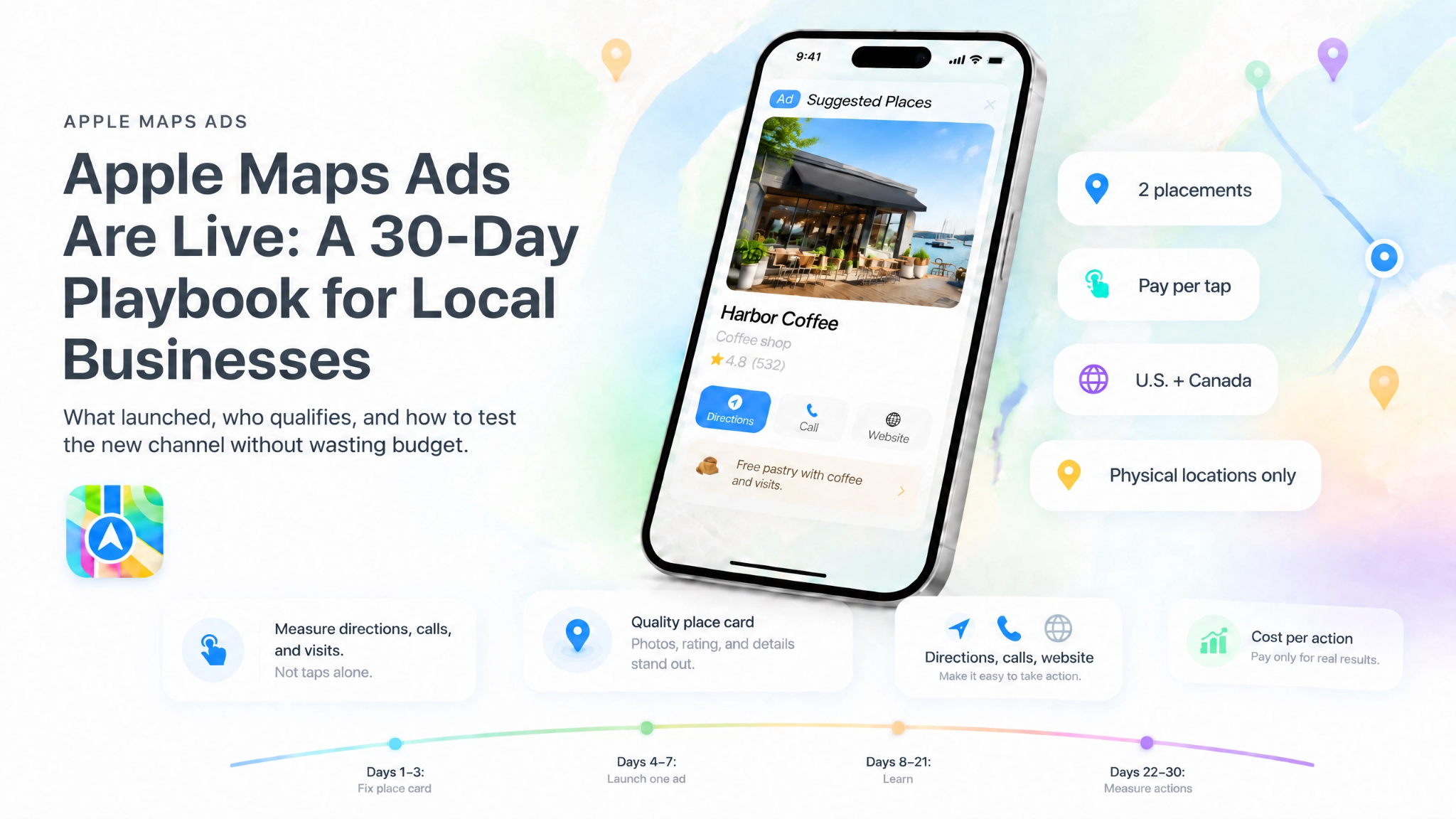
2 placements
Suggested Places and relevant search results
Pay per tap
Set a monthly maximum and pause anytime
U.S. + Canada
Physical, customer-visit locations only
What Apple launched
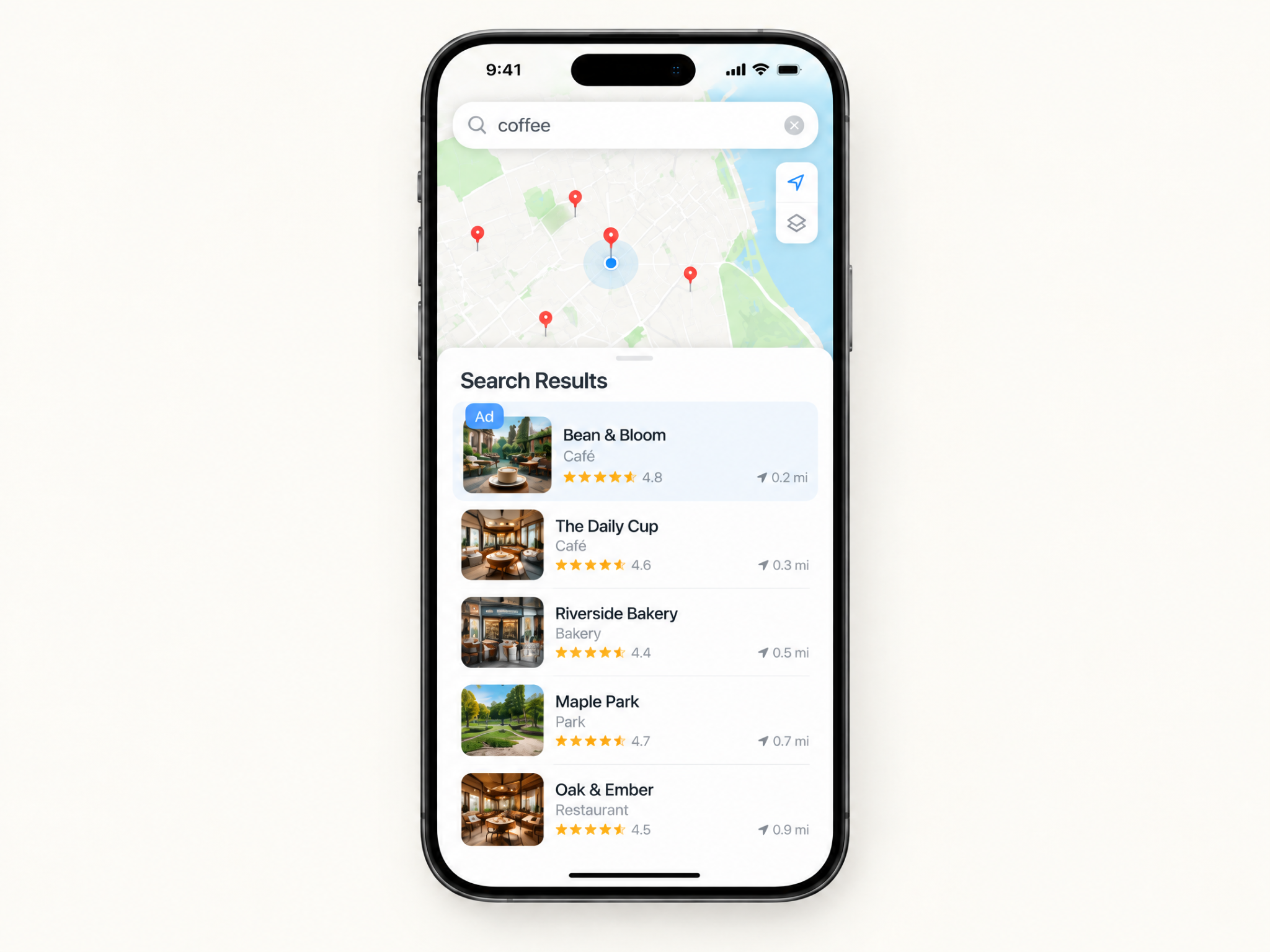
Ads can appear before a search at the top of Suggested Places, or after a search at the top of relevant results. They are labeled “Ad.” Apple selects the placement and ad format automatically based on the business category and the customer’s search. In the self-serve version, owners choose the locations, creative, and monthly budget, then start or stop the campaign at any time.
Creative is intentionally simple. You can use up to three business photos or one logo, plus optional promotional text. You cannot combine photos and a logo. Apple says three photos unlock all available search-result formats, so strong location and product images are usually the better starting point for a local business.
The launch offer is timely. Eligible businesses that book with a credit card by October 11, 2026 can receive a 15% statement credit the following month, up to $1,000 per month for up to one year. Terms and eligibility apply.
Check eligibility before you plan a campaign
Apple Maps ads currently require a business location and organization address in the U.S. or Canada. The location must be a physical place customers can visit. Apple’s current policy also prohibits several categories, including plumbing, electrical, locksmith, HVAC, pest control, roofing, and general contracting. That means many service-area businesses cannot participate at launch, even if they have an office.
Businesses with five or fewer locations can use the automated campaign tools inside Apple Business. Larger operators and existing Apple Ads advertisers are directed to Apple Ads for more control. Review Apple’s current advertising policies before investing time in creative.
How local businesses should use it
- Fix the free listing first. Claim and verify every location. Confirm the primary category, hours, phone number, website, and map pin. Add current photos, a useful Showcase, and a direct action such as Reserve, Order, or View Menu when available.
- Build for the next decision. Use photos that answer “Is this the right place?” Show the storefront, signature product, atmosphere, parking, or a recognizable service area inside the premises. Keep promotional text specific and current.
- Start narrow. Test one offer or customer intent across one to three locations. Use a monthly cap you can sustain for 30 days. Do not split a small budget across many messages before you have a baseline.
- Measure actions, not taps. Apple Business reports impressions, taps, spend, and attributed actions, including directions, calls, website visits, photo views, shares, and app downloads. Track cost per action as spend divided by actions. For most storefronts, directions and calls are stronger signals than taps alone.
- Use the data to improve organic visibility. Location Insights shows brand versus category searches, place-card views, customer actions, and geographic patterns. If category searches are strong but actions are weak, improve the listing and offer before raising the budget.
A practical 30-day test
The bottom line
Apple Maps ads deserve a controlled test if your business qualifies. The channel reaches people with local intent, setup is simple, and the launch credit reduces early cost. But the winning sequence matters: strengthen the place card, run one focused campaign, and judge it by valuable actions. Paid visibility cannot rescue an inaccurate or unconvincing listing.