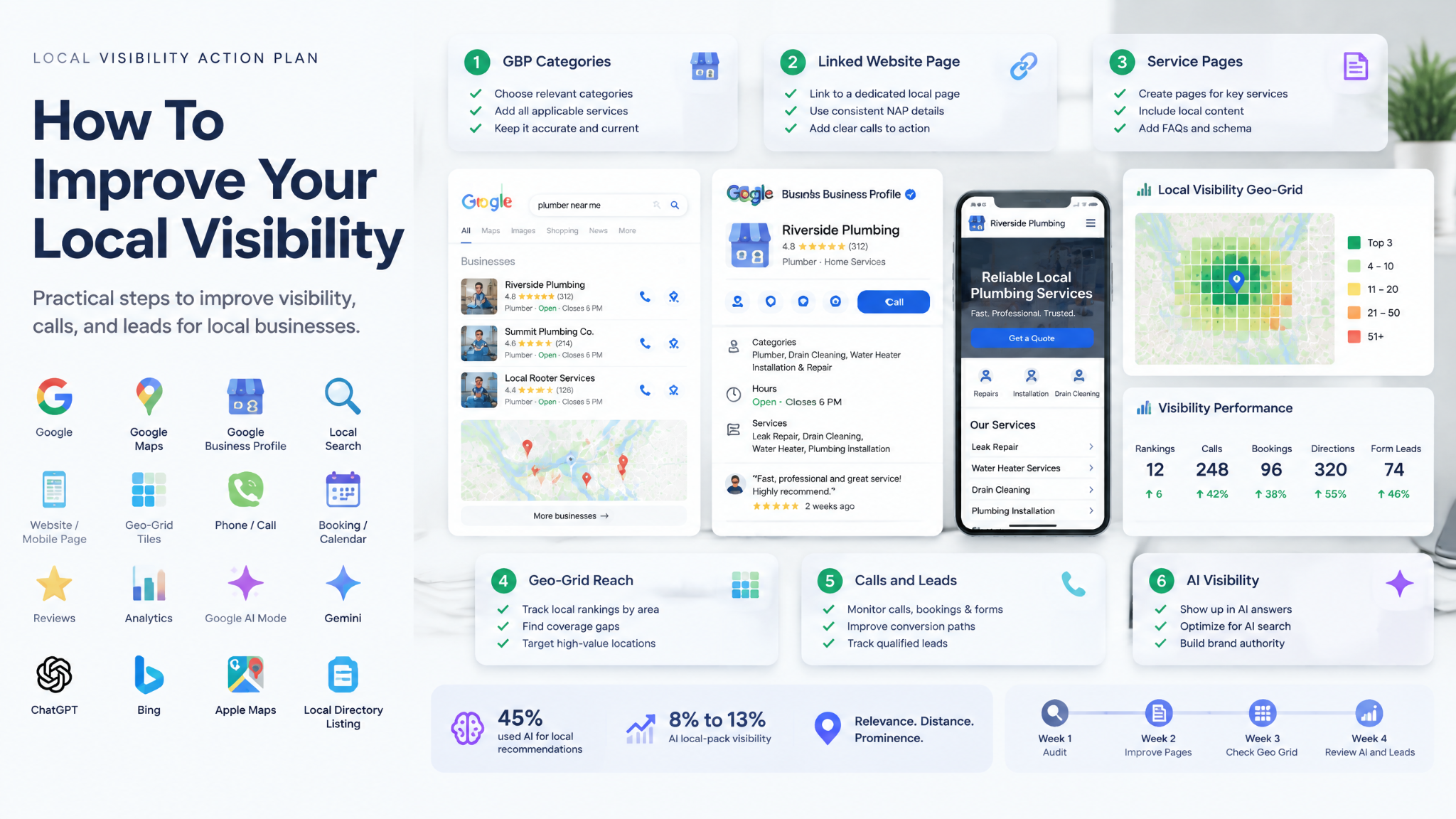
Local search is changing faster than ever. Changes to Google’s result layouts, map packs, AI-driven results, and contact options mean businesses may lose visibility and enquiries without seeing any movement in their usual ranking reports.
Our advice is to stop treating one ranking as the final measure of success. Businesses should manage local search as an operating channel, with accurate information, relevant pages, realistic geographic targets, and regular lead tracking.
The six actions every local business should take
1. Check your Google Business Profile categories
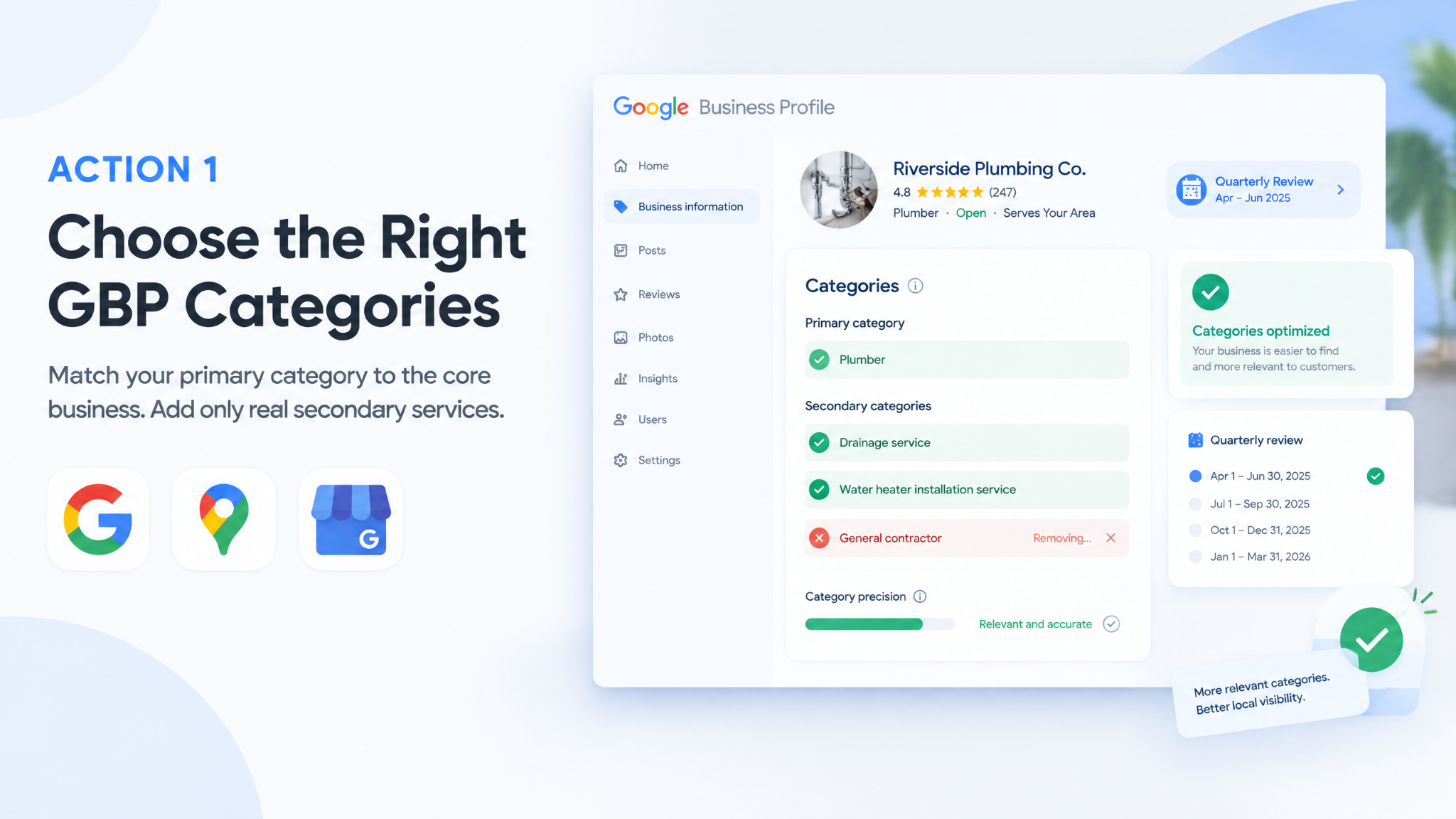
Choose the primary category that describes the core business most precisely. Add secondary categories only for services you genuinely provide. Google advises businesses to use the fewest categories needed to describe the overall operation.
Action: Review categories every quarter and whenever services change. Remove inaccurate or outdated choices.
2. Match the profile to the right website page

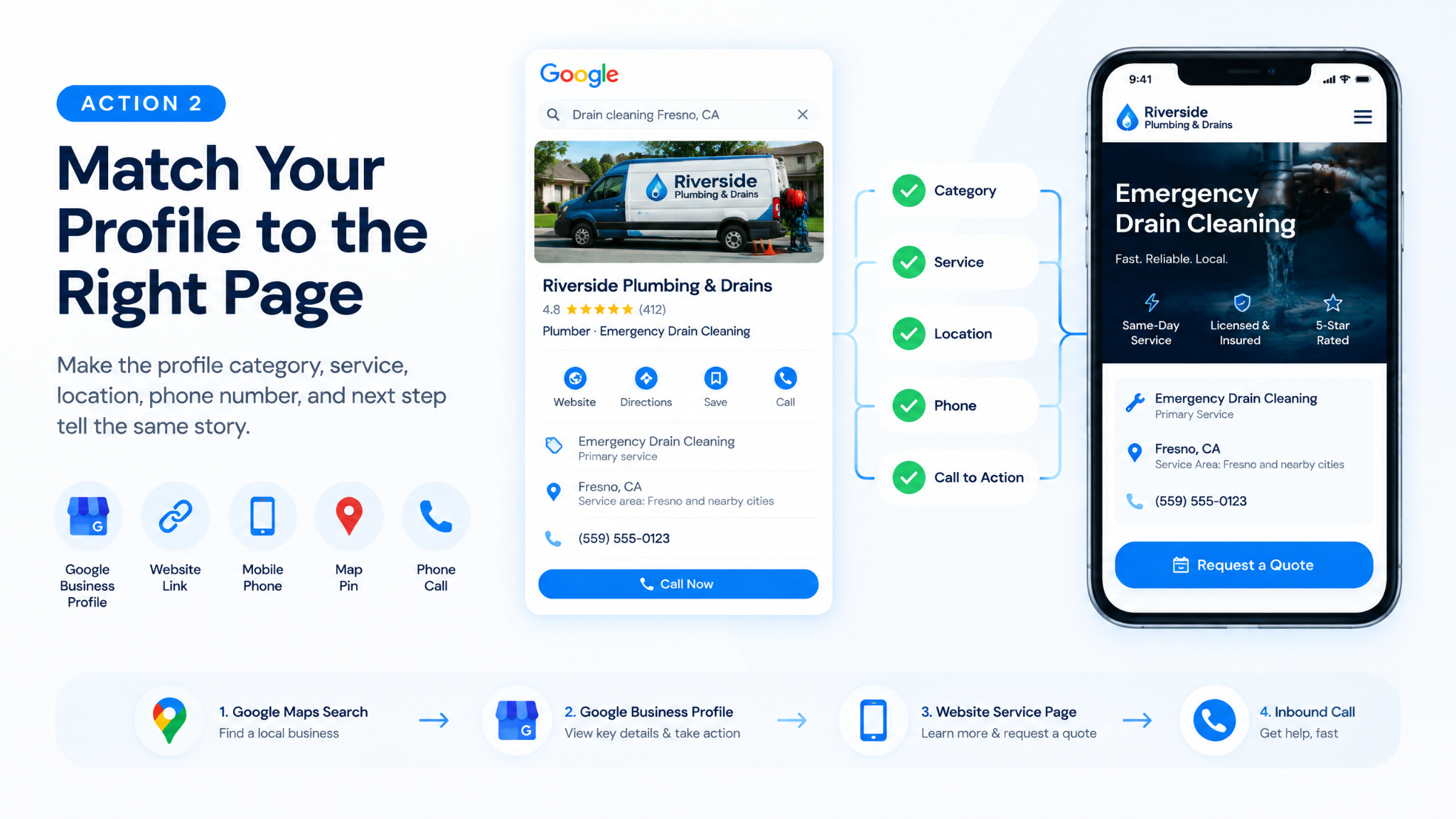
The page linked from the profile should support the same promise as the category and service list. Its heading, copy, location, phone number, and call to action should make the next step obvious.
Action: Open the linked page as a customer. Confirm that it explains the main services and makes calling, booking, or requesting a quote easy on mobile.
3. Give each major service a useful page
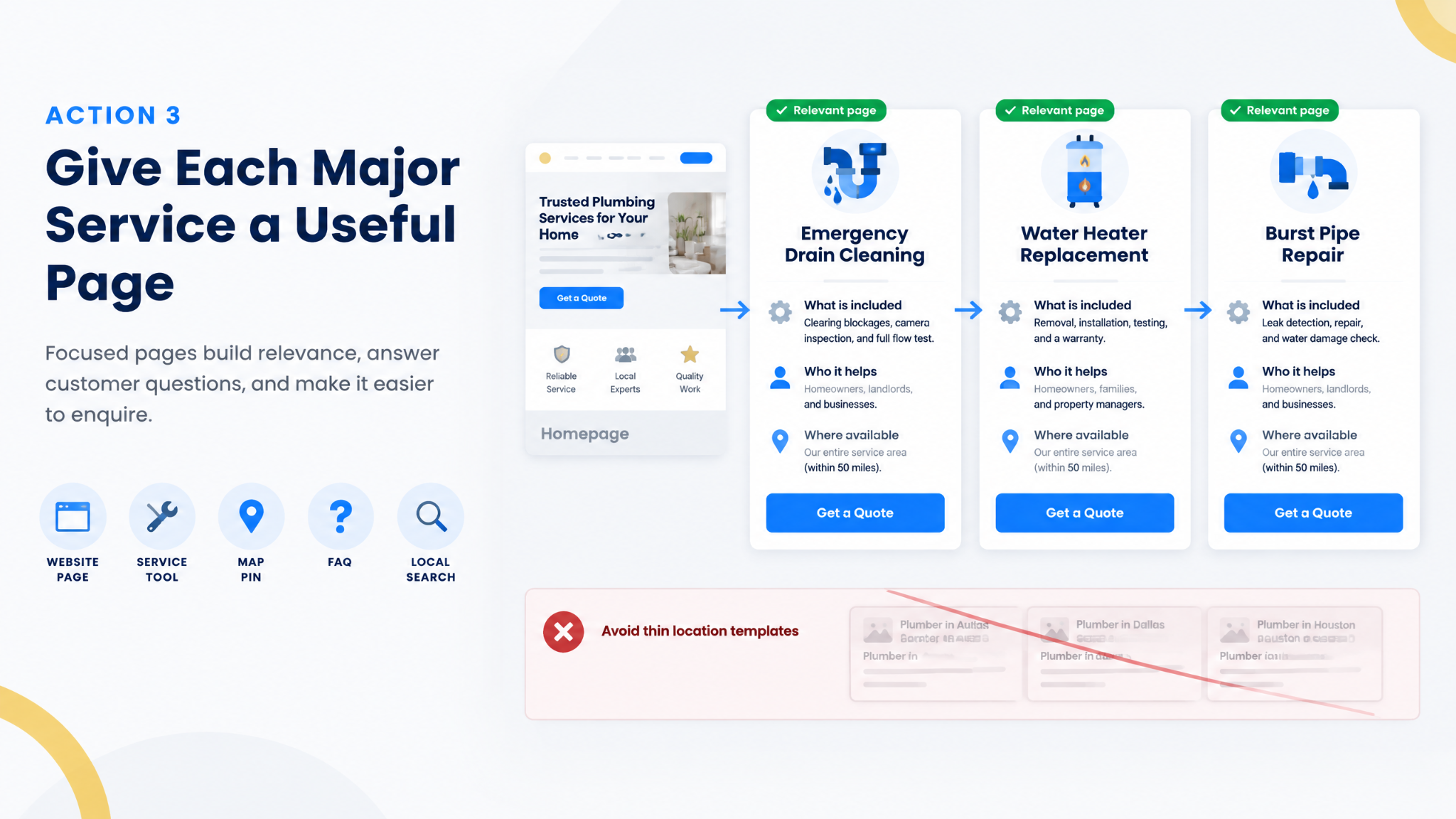
A homepage should introduce the business. It should not carry the full ranking and conversion burden for every service.
Action: Create a focused page for each high-value service. Explain what is included, who it helps, where it is available, and how to enquire. Avoid thin pages that only swap one city name for another.
4. Set realistic geographic expectations

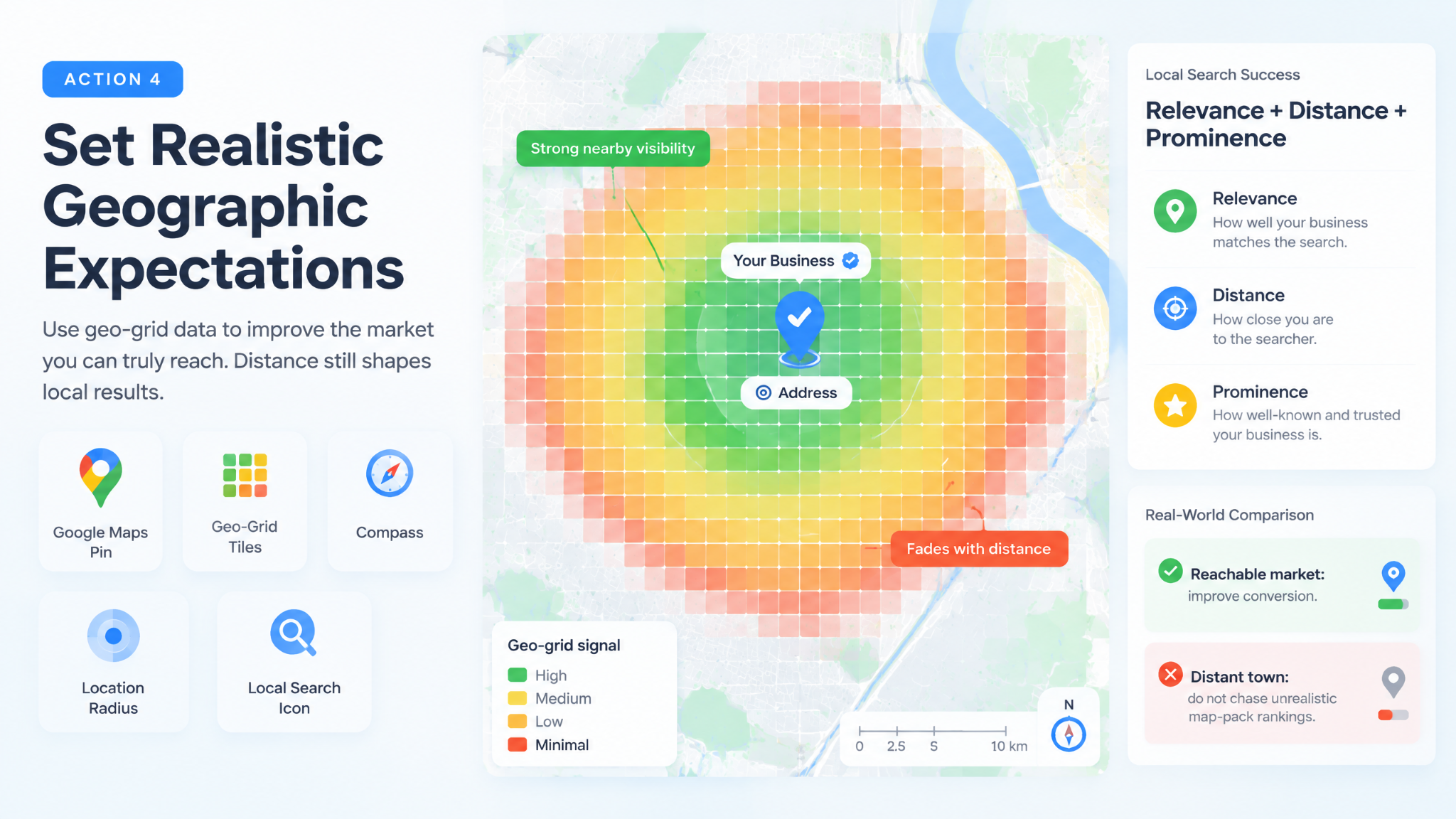
Google says local results are mainly shaped by relevance, distance, and prominence. Strong optimization cannot remove the effect of distance.
Action: Use geo-grid tracking to see how visibility changes across the area. If performance is strong nearby but fades farther away, improve conversion inside the reachable market before spending more to chase distant rankings. Consider another location only when it is a legitimate operating site and the commercial case is clear.
5. Measure the customer journey, not only rankings
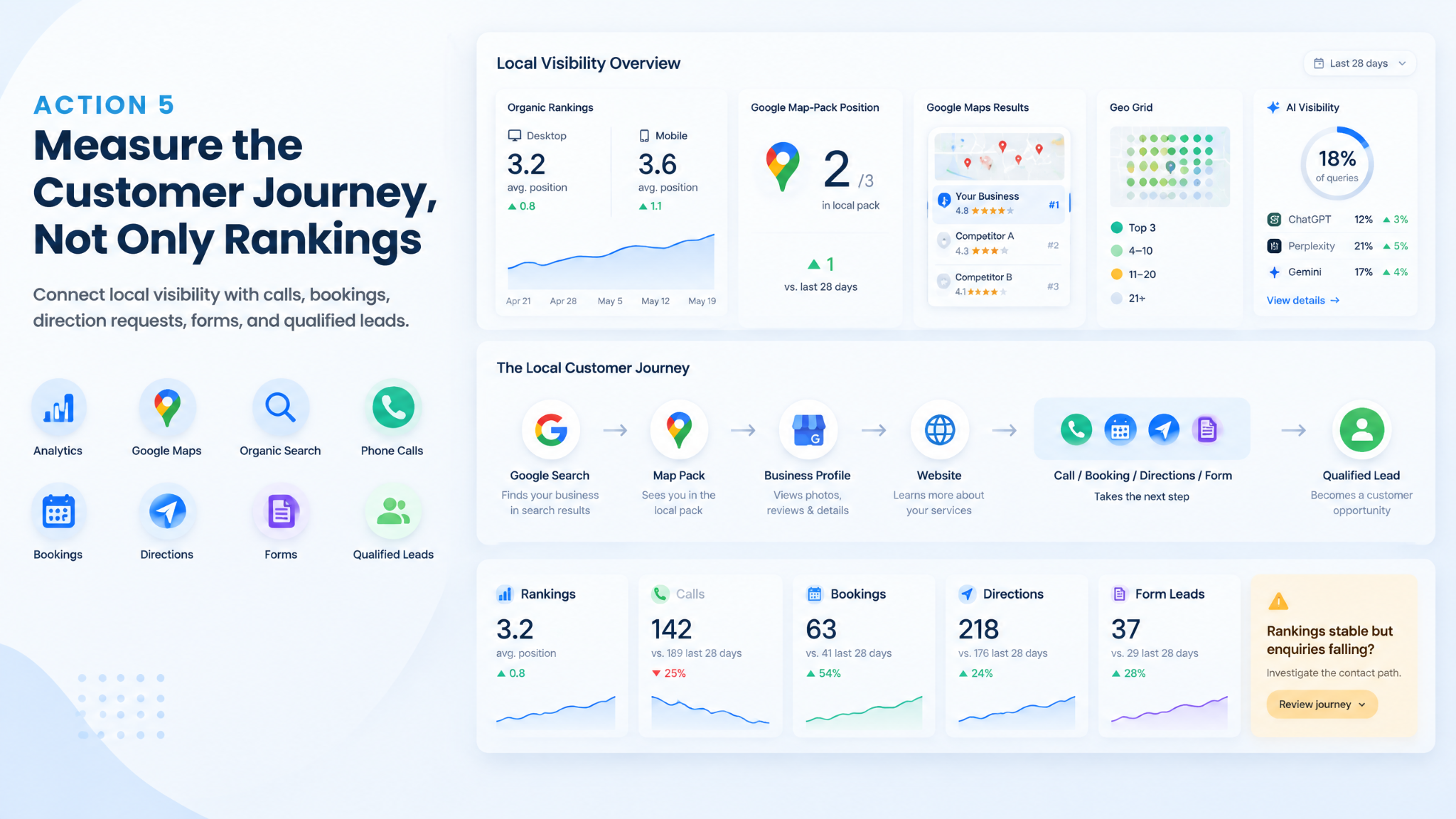
The result a customer sees is what matters. Our dashboard combines Google organic rankings across desktop and mobile, organic map packs, Google Maps results, geo-grid coverage, and AI visibility.
Action: Review rankings alongside calls, bookings, direction requests, forms, and qualified leads. Investigate when rankings look stable but enquiries fall.
6. Prepare for AI-driven local results

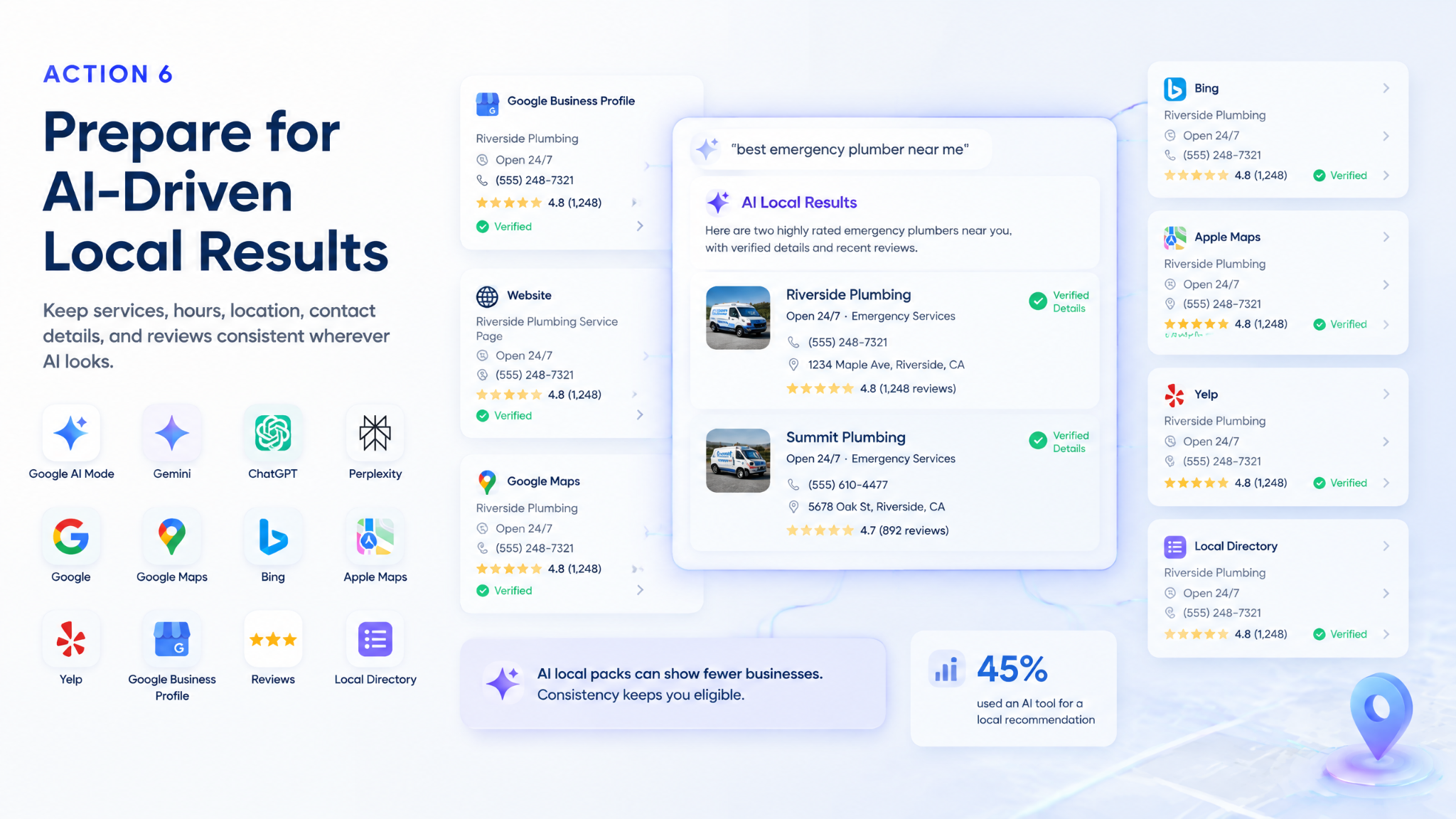
AI local packs can show fewer businesses than the traditional three-pack, and some versions remove click-to-call. Sterling Sky reported these packs on about 8% of tracked keywords in January 2026, while a later August post reported about 13% of queries.
The shift still deserves attention. In a 2026 BrightLocal survey, 45% of consumers said they had used an AI tool for a local-business recommendation during the previous year.
Action: Check whether the business appears in live AI-assisted results. Keep services, hours, location, contact details, and reviews consistent across the website, Google, Bing, Apple Maps, and relevant directories.
This is exactly the reason we track AI visibility across ChatGPT, Google AI Mode, Gemini, and other AI search engines. Our tracking covers the top local search prompts across industries, helping businesses see where they appear, which competitors are being recommended, and where visibility is being lost.
Warning signs that require attention
A practical 30-day plan
Final advice
Local search success now depends on accuracy, relevance, geographic realism, and measurement beyond rankings. Treat the profile, website, map visibility, AI visibility, and lead data as one connected system.
Businesses that review this system regularly are more likely to spot lost visibility before it becomes lost revenue. If you want a clear baseline and an ongoing action plan, our local SEO service brings the tracking, analysis, and improvements together in one place.